
























If you are comparing agencies or SEO packages for an online store, it is natural to ask: how much should eCommerce SEO actually cost?
The answer depends on your store’s size, number of products, platform, category competition, technical condition, and revenue goals. A Shopify store with 50 products has very different needs from a D2C brand with 5,000 products, multiple category levels, frequent stock changes, and national competitors.
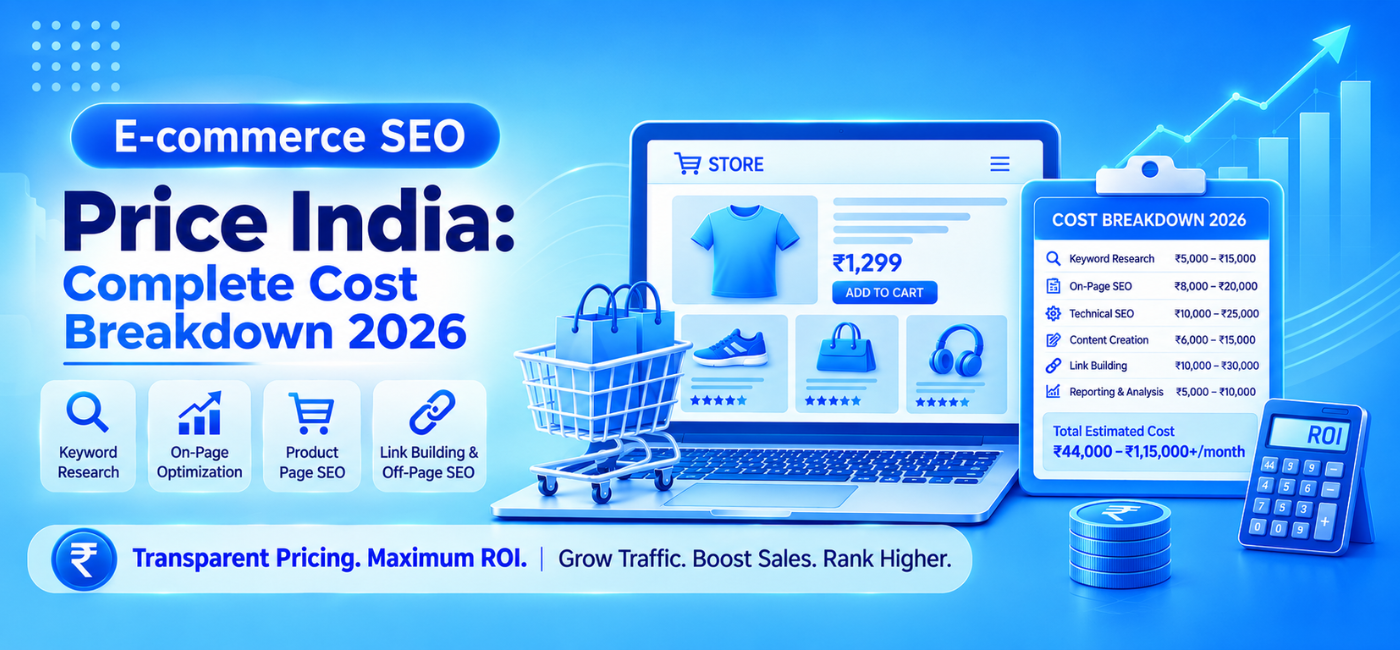
That is why E-commerce SEO price India ranges widely in 2026. Recent market guides place basic ecommerce packages around ₹10,000–₹25,000 per month, growth-stage programs around ₹25,000–₹60,000, and competitive or enterprise programs at ₹60,000–₹1,50,000+ monthly. Bigger, technically complex catalogues can require higher budgets.
The goal is not to find the cheapest package. It is to find a provider with the right scope to improve product visibility, category rankings, organic conversions, and revenue.
Table of Contents
- Why ecommerce SEO costs more than normal SEO
- Ecommerce SEO pricing in India
- Pricing by store size
- What affects ecommerce SEO cost
- What an ecommerce SEO package should include
- One-time audit vs monthly retainers
- Freelancer vs agency pricing
- Platform-specific SEO costs
- How to compare SEO proposals
- Red flags in cheap ecommerce SEO
- Expected SEO timeline and ROI
- 90-day ecommerce SEO plan
- FAQs
- Conclusion and CTA
Why Ecommerce SEO Costs More Than Standard SEO
A standard service website might have 10 or 20 important pages. An eCommerce website can have hundreds or thousands of product, category, filter, tag, internal search, variant, review, and pagination URLs.
This creates more work across technical SEO, content, and website structure.
Ecommerce SEO often includes:
- Product-page optimization.
- Category and collection-page optimization.
- Keyword mapping.
- Product schema and offer schema.
- Image optimization.
- Duplicate-content prevention.
- Canonical tag management.
- Faceted-navigation control.
- Indexation management.
- Internal linking.
- Page-speed improvement.
- Mobile UX improvements.
- Out-of-stock product handling.
- Buying-guide content.
- Digital PR and link earning.
- Organic revenue tracking.
The larger the catalogue, the more important templates, automation, technical audits, and development coordination become.
Ecommerce SEO Pricing in India
There is no fixed industry rate. Pricing differs based on the number of pages, scope of work, competition, platform, content needs, reporting, and agency expertise.
Use these ranges as planning estimates rather than fixed quotes.
| Package level | Typical monthly investment | Best suited for | Common scope |
| Starter | ₹10,000–₹25,000 | Small stores with limited products | Basic audit, selected page optimization, monthly reporting |
| Growth | ₹25,000–₹60,000 | Stores with 100–1,000 products | Technical SEO, category work, product-page optimization, content strategy, schema |
| Competitive | ₹60,000–₹1,50,000+ | National D2C brands and competitive categories | Ongoing technical work, content, authority building, advanced reporting |
| Enterprise | ₹1,50,000–₹3,00,000+ | Large catalogues and complex stores | Crawl-budget management, development coordination, automation, multi-market SEO |
Current market pricing references show similar bands, although the exact scope varies. One 2026 guide lists ₹10,000–₹25,000 for basic packages, ₹25,000–₹60,000 for growth plans, and ₹60,000–₹1,50,000+ for competitive ecommerce campaigns. Other providers place small-store programs nearer ₹30,000–₹60,000 and complex stores at ₹1,20,000–₹2,00,000+.
The difference usually comes down to the amount of hands-on work included.
Pricing by Store Size
Small ecommerce store: up to 100 products
A small store might need:
- Technical SEO setup.
- Search Console and analytics review.
- Priority product optimization.
- Basic collection-page content.
- Metadata improvements.
- Image and alt-text guidance.
- Basic schema setup.
- Internal-linking improvements.
- Monthly performance reporting.
A focused foundational package can work well when the store has a manageable catalogue and lower competition.
Growing store: 100 to 1,000 products
Growing stores often need:
- Category-level keyword research.
- Product and collection-page templates.
- More detailed technical SEO.
- Crawl and indexing monitoring.
- Content marketing.
- Structured data improvements.
- Product-feed checks.
- SEO support for new product launches.
- Authority-building work.
- Conversion tracking.
This tier requires a more consistent monthly SEO process because inventory, collections, and competition change regularly.
Large store: 1,000 to 10,000 products
Large catalogues can create technical issues that a small store never faces, such as:
- Crawl-budget waste.
- Faceted-navigation duplication.
- Multiple variants and parameter URLs.
- Bulk metadata requirements.
- Pagination issues.
- Discontinued product URLs.
- Slow database-driven templates.
- Dynamic rendering problems.
These stores often need an agency or specialist who can work closely with development, merchandising, content, and marketing teams.
What Affects Ecommerce SEO Cost?
Catalogue size
More products and categories require more SEO work. A store with 30 products may need manual improvements. A store with 3,000 products may need templates, rules, automation, bulk optimization, and technical controls.
Competition level
Ranking for niche handmade products is different from competing in high-demand categories like fashion, beauty, electronics, furniture, jewellery, health supplements, or home décor.
More competitive categories typically require stronger content, authority-building, technical performance, and long-term investment.
Current technical condition
A store with slow pages, duplicate URLs, missing canonicals, weak schema, poor mobile layout, or broken internal links needs foundation work before it can scale content.
Platform
Your technology affects the process. Shopify, WooCommerce, Magento, and custom platforms all require different checks.
For Shopify stores, key work may include collection-page strategy, app audits, canonical checks, product and variant optimization, image performance, schema, and internal linking. NP Creations’Shopify SEO services focus on improving store visibility, keyword rankings, qualified traffic, and sales performance.
Content needs
Stores that require buying guides, product comparisons, category descriptions, FAQs, and product copy will have a higher content requirement than stores with strong existing pages.
Geographic scope
An India-only store has a different SEO scope from a business targeting the US, UK, UAE, Australia, or several global markets. Multi-market SEO can involve localized keyword research, regional content, technical setup, and hreflang implementation.
For cross-border brands, NP Creations’ International SEO services can support global visibility through location-focused SEO strategies.
What Should an Ecommerce SEO Package Include?
A good proposal should explain exactly what will happen each month.
| SEO area | Typical deliverables |
| Technical SEO | Crawl audit, indexation review, canonical checks, sitemap review, redirects, Core Web Vitals |
| Product pages | Titles, descriptions, H1s, images, schema, internal links |
| Category pages | Keyword targeting, copy, FAQs, category hierarchy, related links |
| Content strategy | Buying guides, comparisons, use-case content, blog calendar |
| Structured data | Product, offer, review, breadcrumb, and organization schema where appropriate |
| Website architecture | Navigation, collection structure, breadcrumbs, internal links |
| Authority | Digital PR, outreach, relevant links, brand mentions |
| Reporting | Rankings, organic traffic, revenue, conversion rate, completed work |
Before agreeing to a package, request clarity on:
- Number of products optimized monthly.
- Number of categories optimized monthly.
- Content pieces included.
- Technical tasks included.
- Whether implementation is included.
- Link-building or digital PR approach.
- Reporting frequency.
- Contract duration.
- Revenue and conversion tracking method.
A provider should explain why each activity matters to your store.
One-Time Audit vs Monthly Retainer
A one-time audit and an ongoing retainer solve different problems.
| Model | Best for | What it usually includes |
| One-time audit | Stores with unclear SEO issues | Technical review, roadmap, prioritized recommendations |
| SEO project | Defined work such as a migration or category rebuild | Implementation plan, redirects, schema, page optimization |
| Monthly retainer | Stores seeking sustainable organic growth | Technical monitoring, content, optimization, authority work, reporting |
| Consulting | Teams with internal writers and developers | Strategy, review, training, and prioritization |
One-time audit
An audit is useful when you need to understand why a store is not ranking or converting. It can identify duplicate pages, slow templates, crawl issues, schema gaps, weak internal links, and category-structure problems.
However, an audit is only the beginning. Someone still needs to implement the recommendations.
Monthly retainer
A monthly program is generally better for stores that want continuing growth. Products change, stock changes, categories expand, competitors improve, and technical issues appear over time.
Most ecommerce businesses need ongoing optimization rather than a one-time SEO task.
Freelancer vs Agency Pricing
A freelancer may cost less than an agency, but the right choice depends on your internal capacity and store complexity.
| Option | Best for | Key consideration |
| Freelancer | Small stores and defined SEO tasks | May have limited capacity across content, development, and authority work |
| SEO consultant | Strategy, audits, complex technical reviews | Your in-house team may need to implement recommendations |
| Agency | Multi-layered, ongoing ecommerce growth | Costs more but can provide strategy, content, technical work, and reporting |
| In-house SEO team | Large stores with continuous needs | Requires recruitment, management, tools, and process ownership |
For a small store, a specialist freelancer may be enough for a technical audit and core-page optimization. For a growing D2C brand, an agency may offer better coverage across strategy, SEO content, technical coordination, reporting, and link acquisition.
Avoid making decisions based on price alone. A low monthly fee can become expensive if the work is generic, poorly implemented, or creates future cleanup problems.
How to Compare Ecommerce SEO Proposals
Before hiring an agency, ask specific questions.
- How will you choose priority categories and products?
- What technical issues will you review first?
- How many pages will you optimize each month?
- How do you handle duplicate content and product filters?
- Will you implement the product, review, and offer schema?
- How do you treat out-of-stock and discontinued products?
- What content is included in the package?
- How do you build authority without low-quality backlinks?
- How will you measure organic revenue?
- What access will you need from our developer, CMS, analytics, and Search Console?
- Can you share relevant ecommerce examples or case studies?
- What will be completed in the first 90 days?
A trustworthy provider will ask questions about your platform, catalogue size, margins, category priorities, target markets, existing traffic, conversion rate, and business goals before giving a final scope.
Cheap Ecommerce SEO Warning Signs
Very low-cost packages are not always bad, but they may have a limited scope. Be careful if a provider promises extensive technical SEO, product optimization, content, backlinks, and rankings at a price that cannot realistically cover skilled work.
Warning signs include:
- Guaranteed first-page or number-one rankings.
- No technical audit.
- No scope document.
- Hundreds of low-quality backlinks.
- Copied product descriptions.
- No revenue tracking.
- No reporting access.
- One identical package for every store.
- No questions about your catalogue or platform.
- No developer coordination.
- No discussion of categories, filters, product variants, or stock status.
Good SEO should improve profitable visibility, not just produce a long ranking spreadsheet.
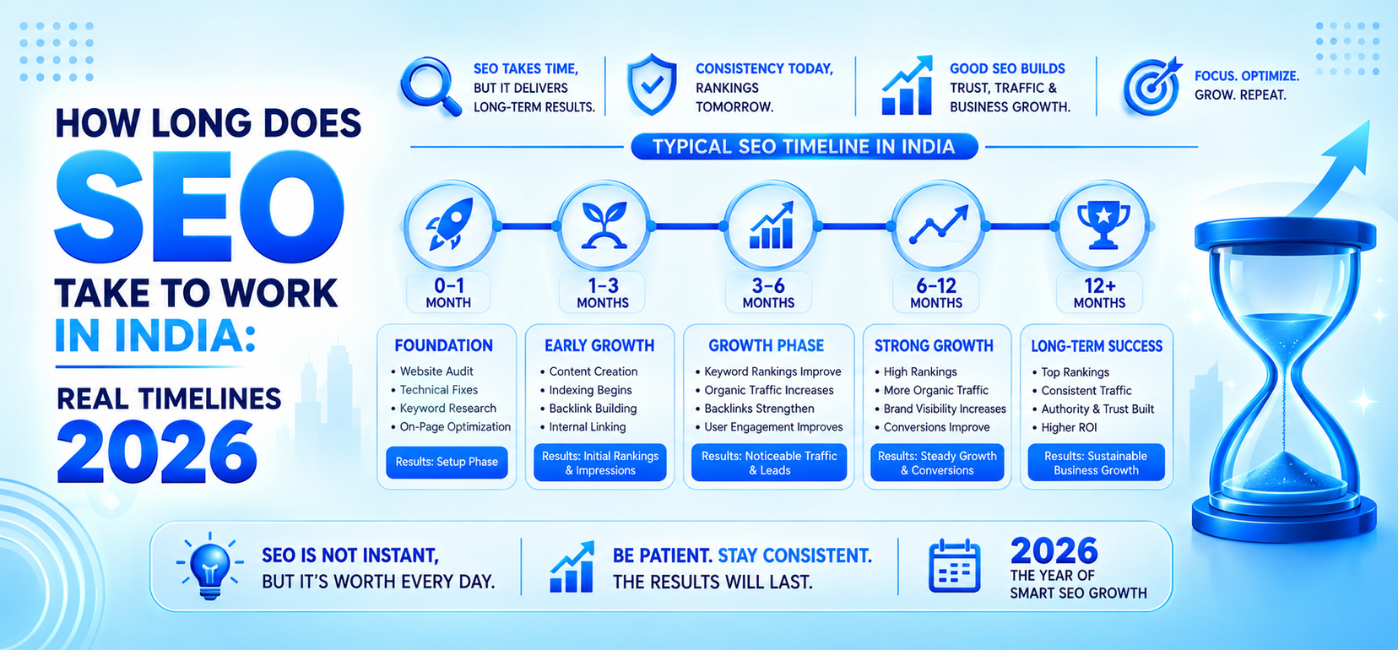
Expected Timelines and ROI
SEO takes time because search engines must crawl, understand, index, and reassess improved pages. The timeline also depends on category competition, website quality, content, authority, implementation speed, and existing brand strength.
| Timeline | Primary activities and expected progress |
| Month 1 | Audit, tracking, keyword mapping, technical priorities |
| Months 2–3 | Product and category-page optimization, schema, internal links, content launch |
| Months 3–6 | Indexation improvements, wider keyword coverage, early organic growth |
| Months 6–12 | Stronger category visibility, authority, non-branded traffic, organic revenue growth |
Measure performance through:
- Organic revenue.
- Organic conversion rate.
- Non-branded clicks.
- Category-page traffic.
- Product-page impressions.
- Add-to-cart rate.
- Assisted conversions.
- Average order value.
- Customer acquisition cost.
Do not judge SEO only by keyword positions. A category page that brings fewer visits but more purchases is more valuable than a high-traffic blog post with no buying intent.
90-Day Ecommerce SEO Plan
1–30 Days: Audit and strategy
- Audit crawling, indexing, and technical SEO.
- Review Search Console and analytics.
- Identify high-revenue categories.
- Map commercial keywords.
- Find duplicate and thin content.
- Review site architecture.
- Set up organic revenue tracking.
- Create a prioritized roadmap.
31–60 Days: Optimize revenue pages
- Improve priority collection pages.
- Optimize top product pages.
- Add product and offer schema.
- Improve internal linking.
- Optimize images and mobile performance.
- Fix redirects and broken pages.
- Publish the first buying guide or comparison page.
61–90 Days: Scale authority and content
- Expand category content.
- Build comparison and use-case pages.
- Begin relevant outreach or digital PR.
- Refresh pages with high impressions and low clicks.
- Review out-of-stock product handling.
- Analyze organic revenue by category.
- Plan the next quarter of SEO work.
Frequently Asked Questions
1. What is the average E-commerce SEO price in India in 2026?
For small stores, basic programs may start around ₹10,000–₹25,000 per month. Growth plans commonly range from ₹25,000–₹60,000, while competitive ecommerce and enterprise work can cost ₹60,000–₹1,50,000+ per month depending on store complexity and scope.
2. Why is ecommerce SEO more expensive than normal SEO?
Ecommerce websites usually have more products, categories, dynamic URLs, filters, variants, images, and technical SEO requirements. They also need ongoing product and category optimization.
3. Is a one-time ecommerce SEO audit enough?
An audit is useful for identifying problems and setting priorities, but most stores need ongoing SEO to optimize new products, improve categories, publish content, resolve technical issues, and compete over time.
4. How long does ecommerce SEO take?
Some technical fixes may have an earlier impact, but meaningful organic growth generally takes several months. Competitive categories and large catalogues may take longer.
5. Does Shopify need SEO?
Yes. Shopify stores still need product-page optimization, collection strategy, technical SEO, schema, internal linking, page-speed improvements, content, and ongoing tracking.
6. Are cheap ecommerce SEO packages worth it?
They can be useful for limited tasks, but a very cheap package is unlikely to cover deep technical work, useful content, quality authority building, and detailed reporting. Always ask for exact deliverables.
7. How do I measure ecommerce SEO ROI?
Track organic revenue, purchases, conversion rate, product and category-page performance, average order value, non-branded traffic, assisted conversions, and acquisition cost.
Conclusion
The right SEO budget depends on how complex your store is and how aggressively you want to grow. A small store may benefit from foundational technical fixes and core category optimization. A growing D2C brand may need regular content, product optimization, schema, and authority building. Large catalogues often require advanced technical SEO and close collaboration with development teams.
Instead of choosing the cheapest quote, compare proposals based on clear deliverables, technical depth, product and category coverage, revenue tracking, content quality, and platform expertise.
A transparent ecommerce SEO program should show what work is being completed, why it matters, and how it supports organic sales.
Call to Action
Want an ecommerce SEO plan built around product visibility, collection-page growth, technical health, and organic sales? Explore NP Creations’Shopify SEO services for store-specific optimization support.
For broader keyword research, technical SEO, content planning, and AI-assisted optimization workflows, explore AI SEO services.