

A property buyer rarely begins by searching for an unfamiliar agent’s name. They search for a neighbourhood, budget, property type, project, or local broker who can help them make the right decision.
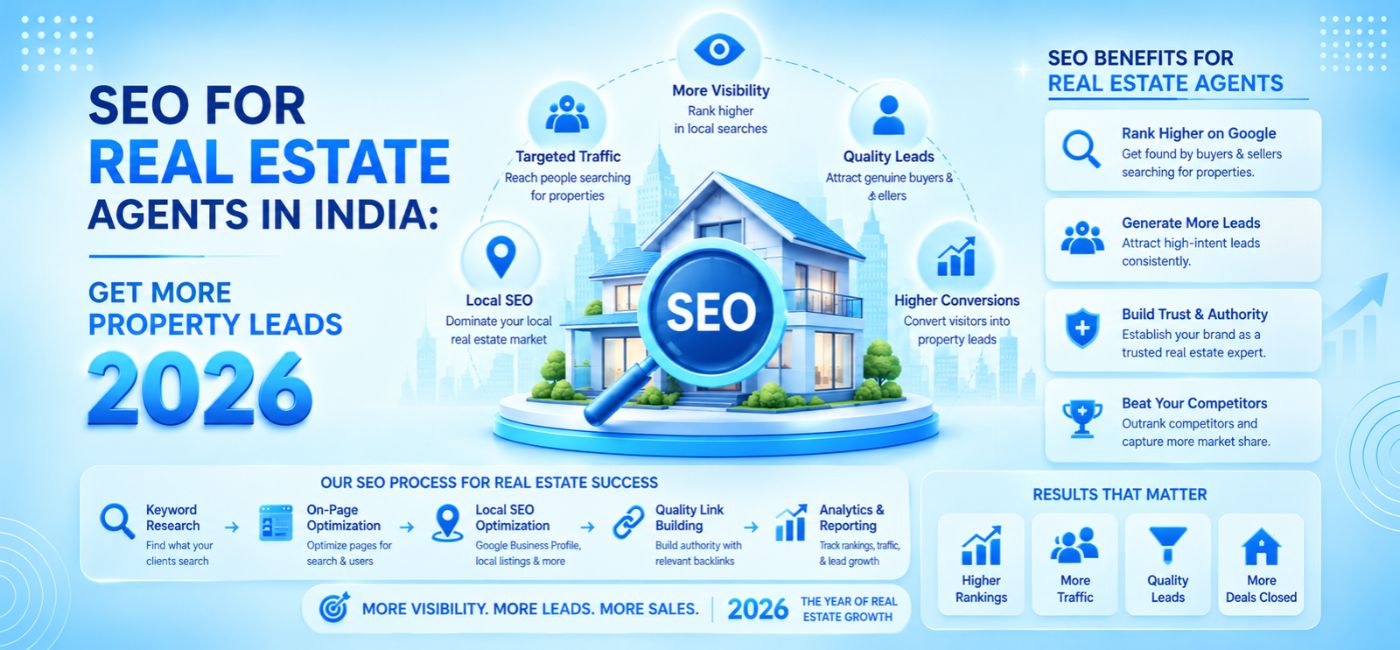
That is where SEO for real estate agents India becomes valuable. Instead of relying entirely on paid campaigns and property portals, agents can build a website and local search presence that attract people researching the areas they genuinely serve.
The aim is not to generate the largest possible number of enquiries. It is to attract buyers, sellers, tenants, and investors whose requirements match your expertise and available inventory.
This guide explains how to build that system through local visibility, useful property pages, neighbourhood expertise, and lead-quality tracking.
Table of Contents
- What real estate SEO should achieve
- Choose your market and customer
- Research searches that indicate buying intent
- Optimize your Google Business Profile
- Build useful locality and property pages
- Publish content that supports decisions
- Improve mobile usability and technical SEO
- Turn visitors into qualified enquiries
- Measure site visits and business outcomes
- Follow a practical 90-day plan
- Frequently asked questions
- Conclusion and next step
What Real Estate SEO Should Achieve
Real estate SEO helps relevant people discover your business through unpaid search results. Your website can answer questions about available properties, specific locations, your services, and the buying or selling process.
Different searches need different pages.
| Search example | Likely requirement | Suitable page |
| “Property dealer in Vijay Nagar Indore” | Find a local professional | Local service page |
| “3 BHK flats in Wakad” | Explore available homes | Location-and-property-type page |
| “Rent or buy in Pune” | Evaluate a decision | Practical comparison guide |
| “Commercial office leasing consultant” | Find specialist support | Commercial leasing service page |
| “Documents to check before buying a flat” | Understand a process | Reviewed educational guide |
A useful strategy connects these pages. Someone reading about a locality should be able to explore relevant listings and contact an agent without starting their search again.
Do not expect every informational visitor to become an immediate lead. Some people are months away from choosing a property. Your content should help them while giving ready-to-act visitors a clear next step.
Start With a Specific Market and Customer
“Everyone looking for property in India” is not a workable target audience for most independent agents.
Begin with your real service area and strongest transaction type:
- Resale apartments in selected neighbourhoods.
- Residential rentals near employment hubs.
- Commercial leasing within a business district.
- Premium homes for relocation buyers.
- Land transactions in an area you understand.
- Seller representation for a defined property segment.
For example, a Pune agent specializing in family apartments in Wakad needs a different website from a Gurugram consultant handling office leasing.
Define a qualified enquiry
Before choosing keywords, agree on what makes a lead relevant.
Useful criteria include:
- Location.
- Property type.
- Budget range.
- Buying, selling, or renting requirements.
- Expected timeline.
- Financing readiness, where relevant.
- Whether the person is a decision-maker.
This definition prevents a common reporting problem: celebrating more form submissions when most enquiries cannot be served.
Use Real Estate Keyword Research to Find Intent
Start with the language customers use during calls, WhatsApp conversations, and site visits.
Build keyword groups around:
- Location plus service.
- Location plus property type.
- Property type plus budget.
- Project-specific questions.
- Seller requirements.
- Commercial use cases.
- Local comparisons.
Examples might include “resale flat broker in Baner” or “warehouse leasing consultant in Ahmedabad.” These are illustrative searches, not verified search-volume opportunities.
Group keywords before creating pages
Do not build a separate page for every small wording variation. “Property agent in Baner” and “real estate broker Baner” may be served by the same strong page.
Create separate pages when the customer genuinely changes. Residential resale, commercial leasing, and property-management services may justify distinct pages if you actually provide them.
Review search results manually. If a query is dominated by property inventories, a short promotional article probably will not satisfy the same need.
Optimize Your Google Business Profile Correctly
Local SEO for real estate agents begins with accurate business information—not extra keywords inserted into a business name.
Google’s business guidelines recognize eligible, public-facing real estate agents as individual practitioners. A dedicated practitioner profile requires meeting the applicable conditions, including being directly contactable at the verified location during stated hours. Corporate sales associates or lead-generation agents are not automatically eligible as individual practitioners.
Complete the information customers need
Review:
- Real-world business name.
- Appropriate category.
- Contact number.
- Website destination.
- Accurate operating hours.
- Address or service-area configuration.
- Services genuinely provided.
- Original office and team photographs.
- Current business details.
Do not create profiles for every neighbourhood you serve or use property addresses as invented office locations. For a detailed setup process, follow NP Creations Google Business Profile optimization guide.
Build an honest review process
Ask customers for feedback without incentives, scripts demanding praise, or pressure. Do not request reviews only from people expected to leave positive ratings.
When replying, protect private information. A public response should not reveal a customer’s budget, negotiations, transaction documents, or personal circumstances.
Build Locality Pages That Demonstrate Knowledge
A useful neighbourhood page should help someone decide whether the area fits their needs.
Instead of repeating “best property dealer” throughout the page, explain:
- Property types you handle.
- The specific locality covered.
- Typical buyer or tenant needs.
- Available inventory, where current.
- Access considerations and local amenities.
- Your service process.
- Relevant experience.
- How to arrange a consultation or visit.
Add information you can substantiate
Avoid promises such as “guaranteed appreciation” or “highest rental yield.” If you publish price trends, explain the source, date, coverage, and limitations.
Similarly, distinguish operational infrastructure from proposed developments. A planned transport connection should not be presented as something buyers can use today.
Avoid thin location pages
Changing only the locality name across 30 nearly identical pages does not create 30 useful resources.
Start with a handful of areas where you have real knowledge, inventory, and the ability to respond. Expand when you can add meaningful information.
Improve Property Listing SEO Without Misleading Buyers
A listing should help visitors establish whether a property matches their requirements before contacting you.
Include relevant details such as:
- Location and property type.
- Current availability.
- Asking price or a clear explanation of how pricing is provided.
- Area measurement and its basis.
- Configuration and furnishing.
- Parking and maintenance information.
- Photographs you are authorized to use.
- Viewing arrangements.
- Last-checked date.
Explain whether an area figure refers to carpet area, built-up area, or another measurement. Do not label estimates as verified facts.
Write original descriptions
Replace vague copy such as “luxurious dream home in prime location” with specific, supportable information.
For example:
“Three-bedroom resale apartment with a separate utility area and two parking spaces. Contact the agent for current availability, maintenance charges, and viewing arrangements.”
Original copy does not require exaggeration. Clear information is more useful than promotional adjectives.
Handle unavailable properties deliberately
Do not keep unavailable homes labelled “available” simply to capture enquiries.
Depending on the page’s value, you can:
- Mark it sold or rented and provide relevant alternatives.
- Retain it as an accurately labelled historical reference.
- Redirect it to a genuinely equivalent replacement.
- Remove it when it no longer serves a useful purpose.
Avoid sending every removed listing to the homepage regardless of relevance.
Use Real Estate Content Marketing to Answer Buyer Questions
Your blog should reflect questions that repeatedly appear in real conversations.
Useful topics include:
- Comparing two neighbourhoods for a particular lifestyle.
- Preparing a property for a viewing.
- Understanding the sequence of a resale purchase.
- Questions to ask before renting an office.
- Information owners should prepare before listing a home.
- How your agency shortlists suitable properties.
Separate experience from professional advice
Agents can explain their process and local observations. Legal, tax, lending, and regulatory guidance should be checked by an appropriately qualified professional.
Where registration or project disclosures apply, verify current details through the relevant official authority before publishing. Do not use “approved,” “verified,” or “risk-free” as loose marketing labels.
For stronger article planning, use NP Creations SEO content writing guidance to structure helpful explanations rather than producing repetitive property blogs.
Make the Website Easy to Use on a Phone
A property enquiry can begin while someone is commuting, comparing locations, or standing outside a project. Test the experience on an actual phone.
Check whether a visitor can:
- Read the price and property details.
- Open photographs without excessive delays.
- Use filters.
- Tap the call button.
- Send an enquiry.
- Return to search results.
- Understand the next step.
Keep contact options clear
Use descriptive actions such as:
- Request current availability.
- Arrange a property viewing.
- Discuss your selling requirements.
- Speak to a local agent.
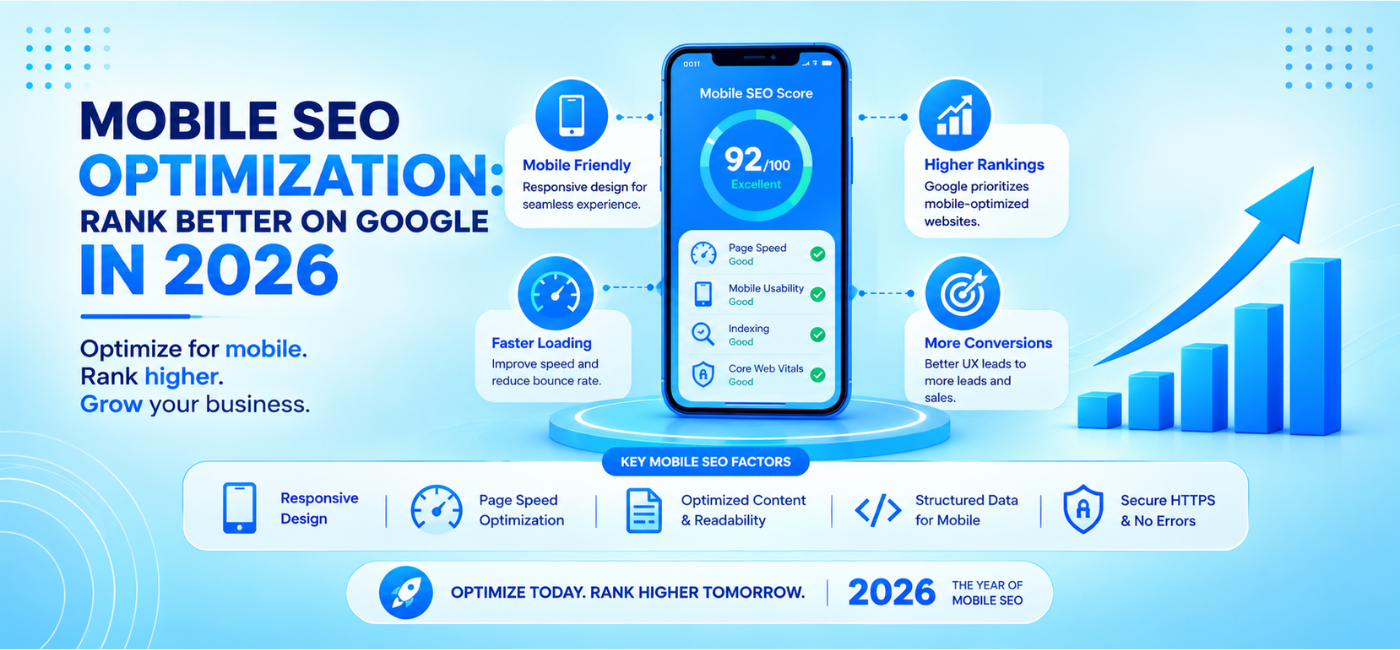
Do not let floating WhatsApp buttons, cookie notices, and promotional overlays cover the content or form. For the technical checks behind a smoother experience, consult NP Creations mobile SEO optimization guide.
Fix Technical Problems Before Expanding Content
Property websites can generate many URLs through filters, sorting, pagination, and listing variations.
Audit whether:
- Important pages are crawlable and indexable.
- Internal links lead to live pages.
- Sitemaps contain intended canonical URLs.
- Filter combinations create unnecessary duplicate pages.
- Listing information is accessible to search engines.
- Redirects lead to relevant destinations.
- Structured data accurately represents visible content.
Schema should describe the business or page truthfully. It does not guarantee a special property-search result or higher ranking.
Start with high-value service and locality pages before commissioning a large content campaign. More pages will not solve a blocked or confusing website.
Turn Traffic Into Qualified Property Leads
The simplest form is not always the best form. Ask enough to understand the requirement, but avoid demanding unnecessary information.
An initial enquiry form might request:
- Name.
- Preferred contact method.
- Buying, selling, or renting.
- Preferred location.
- Budget range.
- Expected timeline.
Explain how you will use the information and ask only for what is needed at that stage. Do not collect identity documents through a generic marketing form.
Match the next step to the page
A person comparing localities may want help shortlisting areas. Someone viewing a particular listing may want to check availability.
Make both journeys possible instead of directing everyone into the same “Buy Now” message.
Measure Lead Quality, Not Just Rankings
Build a simple reporting chain:
Search visibility → website visit → enquiry → qualified enquiry → appointment → site visit → transaction.
| Metric | What it helps you understand |
| Non-branded search clicks | Whether new audiences are discovering you |
| Enquiries by landing page | Which pages start conversations |
| Qualified enquiry rate | Whether traffic matches your services |
| Appointments booked | Whether enquiries progress |
| Site visits completed | Whether prospects remain engaged |
| Transactions and commission | Commercial contribution |
| Response time | Whether follow-up is limiting results |
Track calls and WhatsApp clicks where practical, but do not count every click as a qualified lead. A click may not result in a completed conversation.
Review lost leads too. Budget mismatch, unavailable inventory, slow responses, or poor location fit may explain weak results better than keyword rankings.
A Practical 90-Day Roadmap
1–30 Days: Establish the foundation
- Define your service areas and ideal enquiries.
- Audit the website and existing traffic.
- Check profile eligibility and business information.
- Group keywords by customer need.
- Select priority service and locality pages.
- Set up enquiry-source tracking.
31–60 Days: Improve discovery and conversion
- Publish or rewrite priority pages.
- Update listing information and photographs.
- Improve mobile navigation and forms.
- Add clear viewing and consultation actions.
- Publish two useful local guides.
- Establish a compliant review-request process.
61–90 Days: Learn and refine
- Review indexing and search impressions.
- Identify pages generating relevant enquiries.
- Improve unclear titles and weak conversion paths.
- Remove misleading availability information.
- Gather recurring questions from the sales team.
- Plan the next quarter around qualified-lead evidence.
Treat this as an implementation schedule, not a promise of rankings or transactions within 90 days.
Frequently Asked Questions
1. What does SEO for real estate agents India involve?
It combines local business visibility, service and locality pages, accurate listings, useful content, technical improvements, and conversion tracking to help relevant property customers discover an agent.
2. Can an independent agent have a Google Business Profile?
An eligible public-facing real estate practitioner can have a profile when Google’s conditions are met. Eligibility is not automatic for every salesperson, lead-generation representative, or property address.
3. Should agents create a page for every locality?
Only when each page offers genuine local information and represents an area the agent can serve. A small set of useful pages is preferable to many near-identical ones.
4. Can a small agency compete with property portals?
A small agency should not assume it can outrank major portals for every broad property query. A more practical approach is to target specific local services, niche requirements, and questions where first-hand expertise adds value.
5. How long will the results take?
There is no fixed deadline. Your starting point, competition, implementation speed, content quality, and existing reputation affect progress. Measure early discovery and enquiry quality before expecting consistent transaction-level returns.
6. Do agents still need property portals and paid advertising?
They may remain useful. SEO can complement these channels rather than replace them immediately. Compare qualified enquiries, appointments, and transactions across sources instead of judging channels by lead volume alone.
7. Is ongoing optimization necessary?
It is useful when inventory, availability, services, or local information change regularly. The required workload depends on your website and market; not every independent agent needs a large monthly campaign.
Conclusion
Effective property SEO begins with a focused market, truthful information, and a website that helps customers make decisions.
Prioritize eligible local profiles, detailed neighbourhood pages, current listings, mobile usability, and reliable follow-up. Then measure whether the traffic creates suitable enquiries and completed site visits—not simply more clicks.
Get a Local Search Plan for Your Agency
Need help connecting Google Maps visibility, locality pages, and qualified property enquiries? Explore NP Creations local SEO services To discuss your service areas, website, and lead-generation priorities, contact NP Creations with your current website and target locations.