


























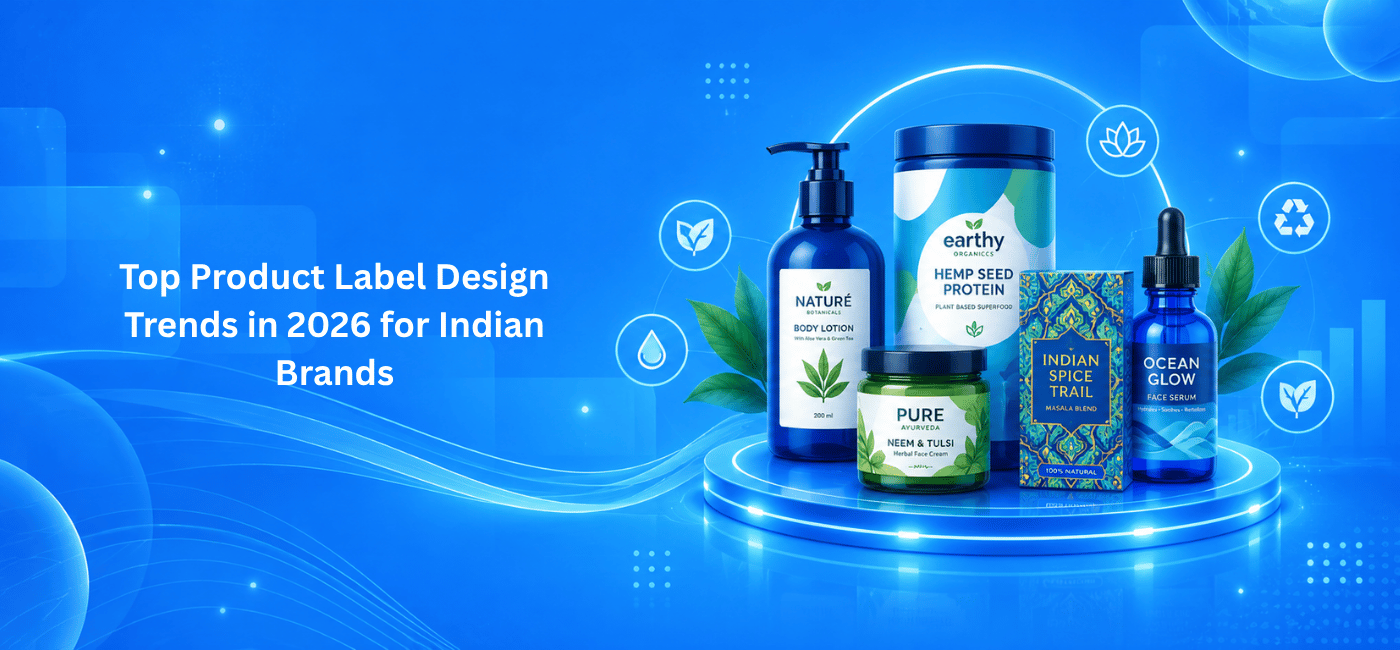
The label on your product is working every second it sits on a shelf or appears in an online listing. It either attracts attention, builds trust, and communicates value—or it gets ignored. In a market as competitive as India, packaging is no longer just about compliance or aesthetics; it’s a direct driver of sales.
Understanding product label design trends 2026 India is not about blindly following what looks good. It’s about aligning your packaging with how consumers think, feel, and make buying decisions today.
Over the past few years, Indian consumers have become far more design-aware. Exposure to global brands, the rise of D2C startups, and social media influence have collectively raised expectations. As a result, brands must now evolve with modern packaging design trends India to remain relevant and competitive.
Let’s look at the trends that are actually shaping buying behavior—and how you can apply them meaningfully.
Warm Minimalism Is Replacing Cold Minimalism
Minimalism is still a dominant design approach, but the style has shifted. Earlier, minimalism meant stark white backgrounds, sharp typography, and a clinical feel. Today, that approach often feels cold and outdated.
The new direction is warm minimalism—soft color palettes like beige, cream, muted greens, and earthy browns. These tones create a sense of comfort and authenticity, which resonates strongly with Indian consumers, especially in categories like food, skincare, and wellness.
More importantly, this trend reinforces clarity. A well-designed label should communicate the product name, purpose, and key benefit within seconds. This principle remains central to all effective label design ideas for Indian brands—no matter the visual style.
Vernacular Typography as a Design Element
One of the most powerful shifts in Indian packaging design is the growing use of regional languages as a visual identity element.
Instead of treating Hindi, Tamil, Bengali, or Marathi as secondary text, brands are now incorporating them into the core design. This adds a layer of cultural relevance and emotional connection that English-only packaging often lacks.
For Indian consumers, especially in regional markets, language builds trust. It signals familiarity and authenticity. This is why vernacular typography is becoming an important part of product label design trends 2026 India.
However, execution is critical. Poor typography or incorrect usage can harm the brand image. When done right, it becomes a strong differentiator and one of the most effective label design ideas for Indian brands targeting diverse audiences.
Eco-Aesthetic Without Eco-Packaging (and With It)
Sustainability has moved from being a niche concern to a mainstream expectation. Indian consumers—especially younger urban buyers—are increasingly conscious of environmental impact.
Interestingly, brands don’t always need to switch materials immediately to communicate this value. Visual cues like kraft textures, muted color palettes, and botanical illustrations create an eco-friendly perception.
This approach is widely seen across modern packaging design trends India, particularly in categories like organic food, herbal products, and personal care.
Of course, aligning the aesthetic with actual sustainable materials strengthens credibility. But even at the design level, this direction helps position a brand as responsible and thoughtful.
Bold Colour Blocking
While some brands move toward subtlety, others are going in the opposite direction—bold, high-contrast visuals that demand attention.
Color blocking uses strong, flat colors with minimal distractions. It works especially well in crowded categories like snacks, beverages, and supplements, where shelves are filled with visually noisy packaging.
In such environments, simplicity becomes the standout factor.
This trend highlights an important principle: standing out doesn’t always mean adding more elements. Sometimes, reducing clutter and committing to bold choices creates a stronger impact.
For brands looking to differentiate quickly, this is one of the most practical label design ideas for Indian brands.
QR Codes That Feel Designed
QR codes are no longer just functional add-ons—they are becoming part of the design language.
Earlier, QR codes were often placed awkwardly on packaging without any visual integration. In 2026, brands are embedding them into the layout, framing them creatively, and making them feel intentional.
More importantly, the experience behind the QR code matters. Consumers expect value—whether it’s a product story, tutorial, discount, or interactive content.
This shift reflects a broader evolution in product label design trends 2026 India, where packaging is not just informative but also interactive.
Illustration Over Photography
Another noticeable trend is the growing preference for illustration over traditional photography.
Custom illustrations offer uniqueness. Unlike stock images, they cannot be easily replicated by competitors. They also allow brands to communicate personality, storytelling, and craftsmanship more effectively.
This is particularly relevant for artisanal, handmade, and premium products, where authenticity plays a key role in purchasing decisions.
Across modern packaging design trends India, illustration is becoming a go-to choice for brands that want to build a distinctive identity.
Functional Transparency in Design
Beyond aesthetics, transparency is becoming a key expectation. Consumers want clear, honest information—ingredients, benefits, usage, and origin.
Labels that present information in a structured and readable way build trust. Overly decorative designs that hide important details are losing relevance.
This shift is especially important in food, health, and personal care categories, where buying decisions are influenced by clarity and credibility.
Among emerging label design ideas for Indian brands, functional transparency is not just a trend—it’s becoming a standard.
Premiumisation Through Simplicity
Indian consumers are increasingly willing to pay more for products that feel premium. However, premium no longer means gold foils and heavy embellishments.
Today, premium is expressed through restraint—clean layouts, thoughtful spacing, and high-quality finishes.
This aligns closely with evolving modern packaging design trends India, where sophistication comes from design discipline rather than excess decoration.
For brands aiming to reposition themselves, this approach offers a practical way to elevate perception without drastically increasing costs.
How to Actually Use These Trends
Trends are useful, but only when applied strategically. Not every trend will suit every brand.
For example, a bold color-blocked label may work well for an energy drink but not for an ayurvedic product. Similarly, a highly minimal design may not be effective in a category where detailed information is expected.
The key is to understand your audience, your category, and your competition.
The most successful brands don’t just follow product label design trends 2026 India—they interpret them in a way that fits their identity. They combine insights from modern packaging design trends India with their own brand story to create something distinctive.
Ultimately, the best label design ideas for Indian brands are those that balance aesthetics with purpose.
Final Thoughts
Packaging is no longer a secondary consideration—it’s a core part of your brand strategy. In many cases, it’s the first interaction a customer has with your product.
As competition continues to grow, especially in the D2C and FMCG space, investing in thoughtful label design can directly impact visibility, trust, and sales.
If your current packaging feels outdated or isn’t performing well, revisiting it with a clear understanding of current trends can make a significant difference.
Because in 2026, good design doesn’t just look appealing—it works.