
























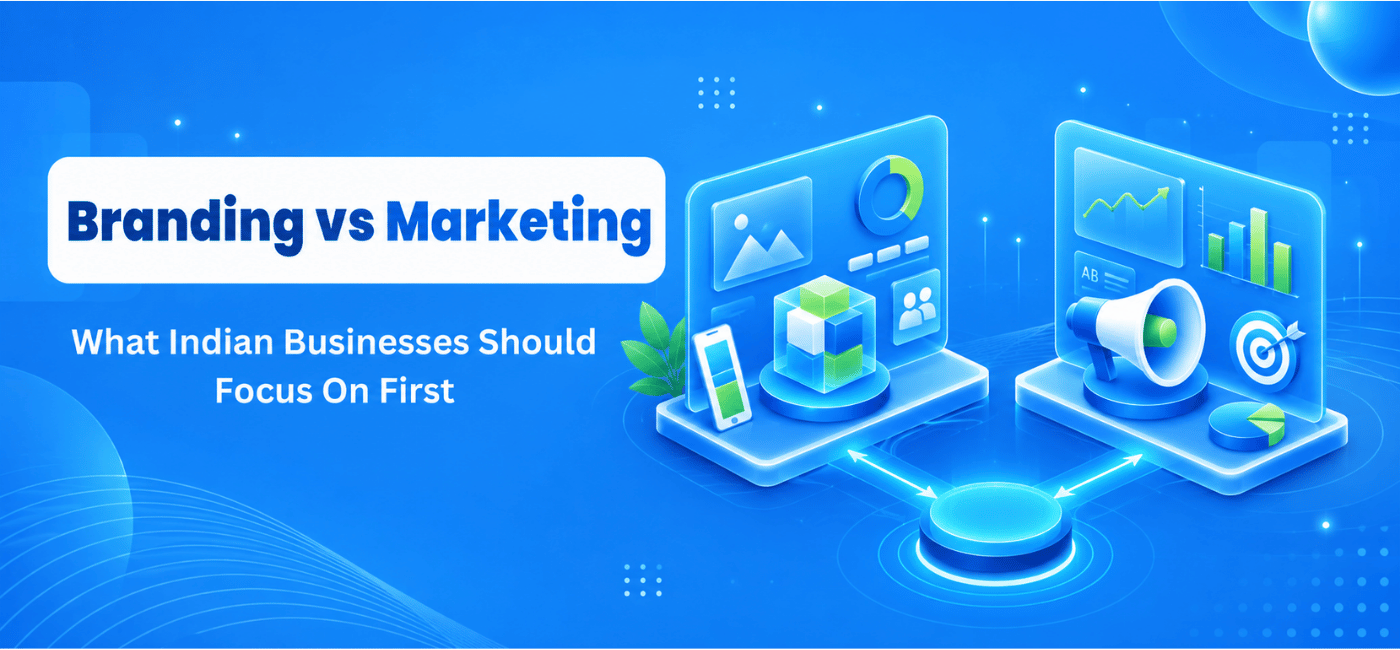
So here’s something I keep seeing in Indian business communities — founders, shop owners, even some decent-sized companies — all confused about the branding vs marketing difference. They use both words like they mean the same thing. They don’t. And honestly, mixing them up is costing businesses real money and real time.
Let me try to break this down without the usual textbook tone. Because I think once you actually get the difference, a lot of your business decisions start making more sense.
First — what is branding in business, really?
Branding is… who you are. Simple as that, but also not simple at all.
Think about Amul. You don’t need to see the tagline every time to know what Amul stands for — it’s value, it’s trust, it’s something your parents used and now you use. That feeling, that automatic association — that’s branding doing its job. Quietly, in the background, for decades.
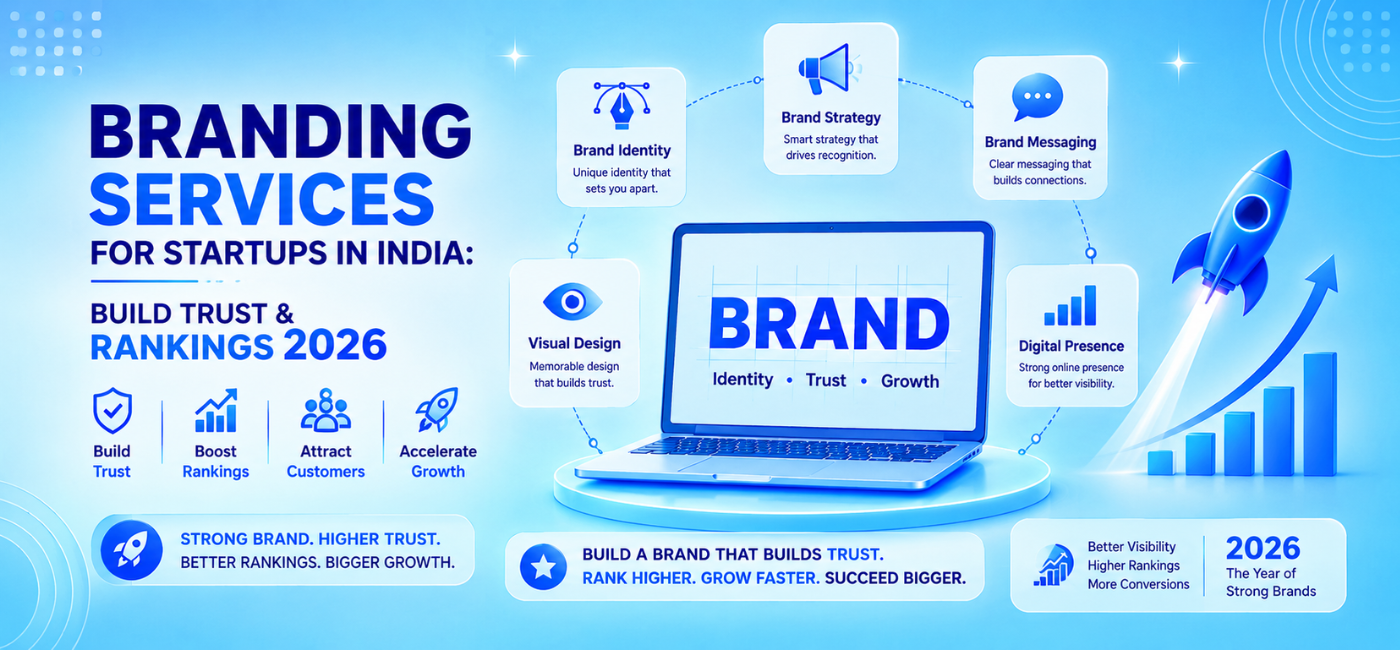
What is branding in business more precisely? It’s the combination of your visual identity (logo, colours, typography), your tone of voice, your values, the way customers feel when they interact with you. It’s not something you run for a week. It builds over time. Sometimes slowly. Sometimes, if you’re lucky and consistent, a little faster.
A local Indore chai stall that’s been around for 30 years — that’s got branding. Nobody made a deck for it. It just happened through consistency, quality, and a certain vibe the owner brings every single day.
“Brand is what people say about you when you’re not in the room.” — Jeff Bezos said it, but honestly, any small business owner who’s survived 10+ years in India could’ve said the same thing.”
And what is marketing in business?
Marketing is how you reach people. It’s the action part — ads, posts, campaigns, offers, SEO, WhatsApp broadcasts, hoardings outside a mall. Marketing brings people to the door. It creates awareness, it drives sales, it announces things.
What is marketing in business at its core? It’s communication with a purpose — and that purpose is almost always to get someone to do something. Click. Buy. Call. Visit. Subscribe.
Marketing is loud. It has to be. And there’s nothing wrong with that. But here’s the thing — it works best when there’s something solid underneath it. Something worth communicating. That something is your brand.
So which comes first for Indian businesses?
This is where it gets interesting. And where I’ll probably disagree with a few marketing consultants.
Most businesses — especially startups and small businesses in India — rush straight into marketing. Instagram reels. Google ads. Influencer tie-ups. All of which can work. But if your brand is unclear, inconsistent, or just… generic? All that marketing spend brings people to a leaky bucket.
The importance of branding for startups really comes down to this: marketing can get you a customer once. Branding is what makes them come back. And in India, where word-of-mouth still drives so much business — in families, in neighbourhoods, in WhatsApp groups — brand perception matters enormously.
A friend of mine runs a saree business out of Surat. She was pouring money into Facebook ads, getting decent clicks, but conversions were low. We looked at her Instagram, her packaging, her messaging. Everything felt… different. No consistent colour palette, the bio said one thing, the posts said another. Customers were landing but not trusting. Once she fixed the brand fundamentals — same tone, same visual style, a clearer story — the same ads started performing better. She didn’t increase her budget. She just gave the marketing something to work with.
The real issue with branding and marketing strategy in India
Many Indian businesses — especially traditional ones transitioning online — treat branding as a luxury. Logo design feels like a vanity expense. A brand strategy document? Why? We’ve been selling steel / furniture / textiles for 40 years without one.
And look, that’s fair. A lot of legacy businesses built their reputation on pure hustle and relationships. But the market is different now. Competition is everywhere. Your customer is comparing you to three other options on their phone before they even meet you.
A solid branding and marketing strategy India context needs to account for this. You’re not just competing with the shop next door — you’re competing with D2C brands that have VC money and full design teams. You don’t need to match their budget. But you do need to be clear about who you are and what you stand for.
Quick thought — brand building vs advertising is a useful frame here. Advertising is rented attention. Brand building is owned perception. One stops working the moment you stop paying. The other keeps compounding.
Digital marketing vs branding — not a competition
Here’s something that trips people up. They see it as either/or. Either I do digital marketing vs branding — I can’t do both, or one has to come first and then never change.
That’s not quite right.
Think of it like a restaurant. Branding is the ambience, the menu design, the way the waiter speaks to you, the consistency of the food. Marketing is the poster outside, the Zomato listing, the Instagram reel of sizzling butter chicken. Both matter. But if the food is bad and the experience is off — no amount of Instagram reels will save you long-term.
For Indian businesses specifically — and I’ve seen this across sectors, retail, services, manufacturing, even agriculture — the ones that invest in branding services India early tend to have a stickier customer base. They charge better prices. They attract better employees and partners too, actually. A business that looks and feels professional signals seriousness.
Marketing strategies for Indian businesses — where branding feeds in
Let’s get practical for a second. If you’re thinking about marketing strategies for Indian businesses, here’s roughly how branding should
Your brand values should shape your content tone. A heritage brand selling handloom sarees shouldn’t suddenly start posting meme content just because memes get engagement. Stay true to what you are, communicate it better.
Your visual identity should be consistent across every touchpoint — your packaging, your website (even if it’s just a basic one), your WhatsApp DP, your visiting card. Sounds small. Isn’t.
Your brand promise — basically, what you reliably deliver — should be what every campaign is built around. Not just “sale 30% off” but “here’s what makes us worth paying for.”
And yes, once that foundation is in place, go aggressive on digital marketing vs branding-style decisions — run ads, do influencer campaigns, try SEO. It’ll compound faster when the brand is clear.
Growth branding vs marketing — what actually moves the needle
There’s a growing conversation around growth branding vs marketing — the idea that branding itself can be a growth lever, not just a support function. I think this is especially relevant for Indian businesses now.
Mamaearth is a good example. Yes, they marketed heavily — but they also built a brand story around “toxin-free, made for Indian skin” and leaned into it hard. That story gave their marketing something to amplify. The growth came from both working together, not one over the other.
Smaller businesses can do this too, just proportionally. A physiotherapy clinic in Pune that consistently brands itself as “the place for athletes and active people” — even locally — is going to attract a better-fit clientele than one that tries to be everything to everyone.
So what should you actually do first?
If you’re an early-stage startup or a business rebuilding its presence — spend real time on brand clarity before you scale marketing. Figure out: who are you, who do you serve, what do you stand for, what makes you different? Even if this exercise takes a few weeks and a few conversations — it’s worth it.
If you’re an established business that’s been around a while but feels “invisible” online — you probably already have a brand, you just haven’t articulated or designed it consistently. That’s a different problem. More about documentation and design than strategy from scratch.
And if you’re somewhere in the middle — running campaigns, getting some traction but not as much stickiness as you’d like — it might be time to pause and ask: does my brand actually mean something to my customer? Or am I just noise?
There’s no universal answer to the branding vs marketing difference debate, honestly. Both matter. But in the Indian context — where trust is built slowly, referrals are gold, and customers are increasingly spoilt for choice — getting your brand right first tends to make everything else work better.
Anyway. That’s my take. Maybe test it against your own business and see what fits.